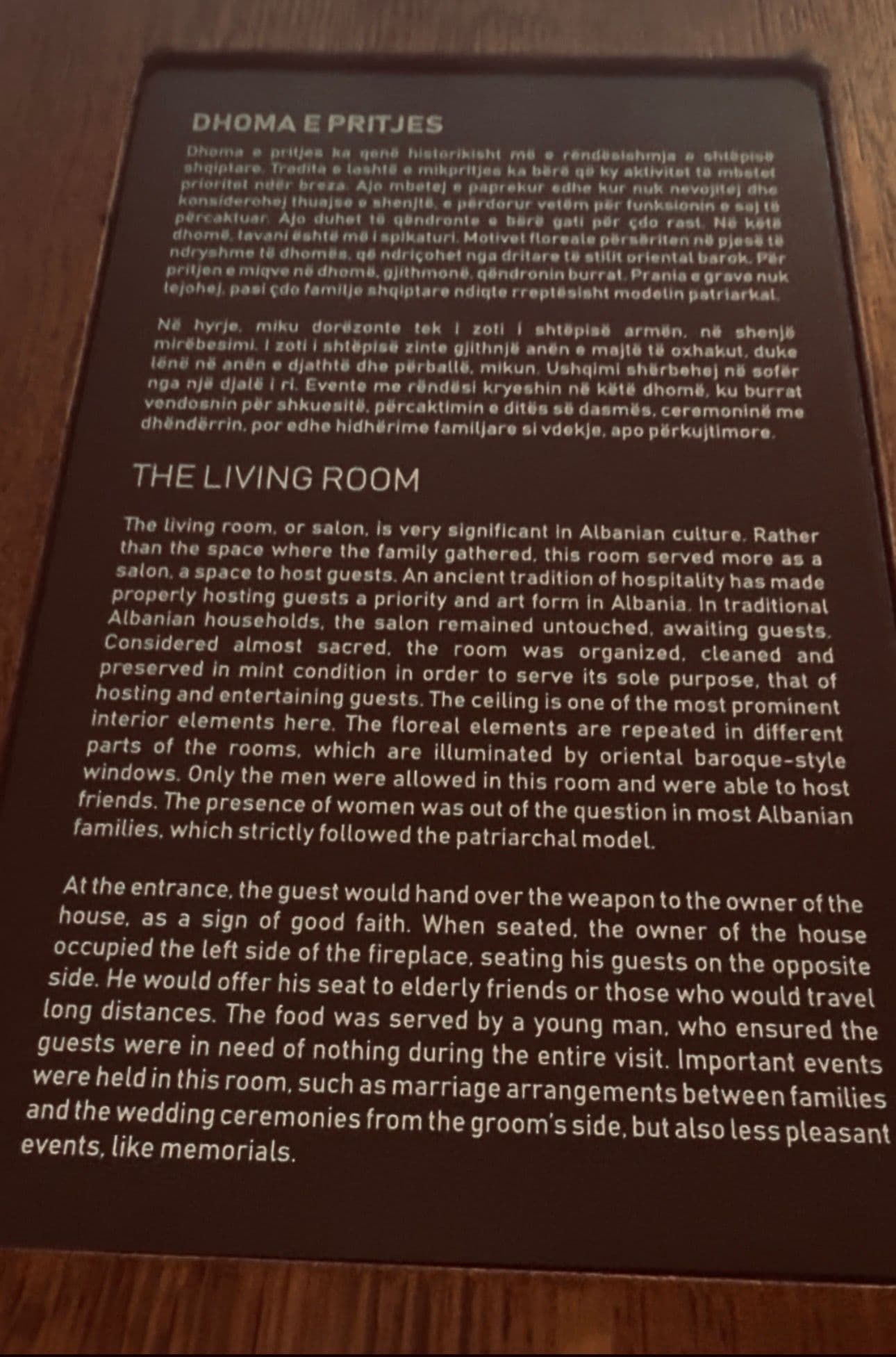
How male-codedness lives in the Living Room
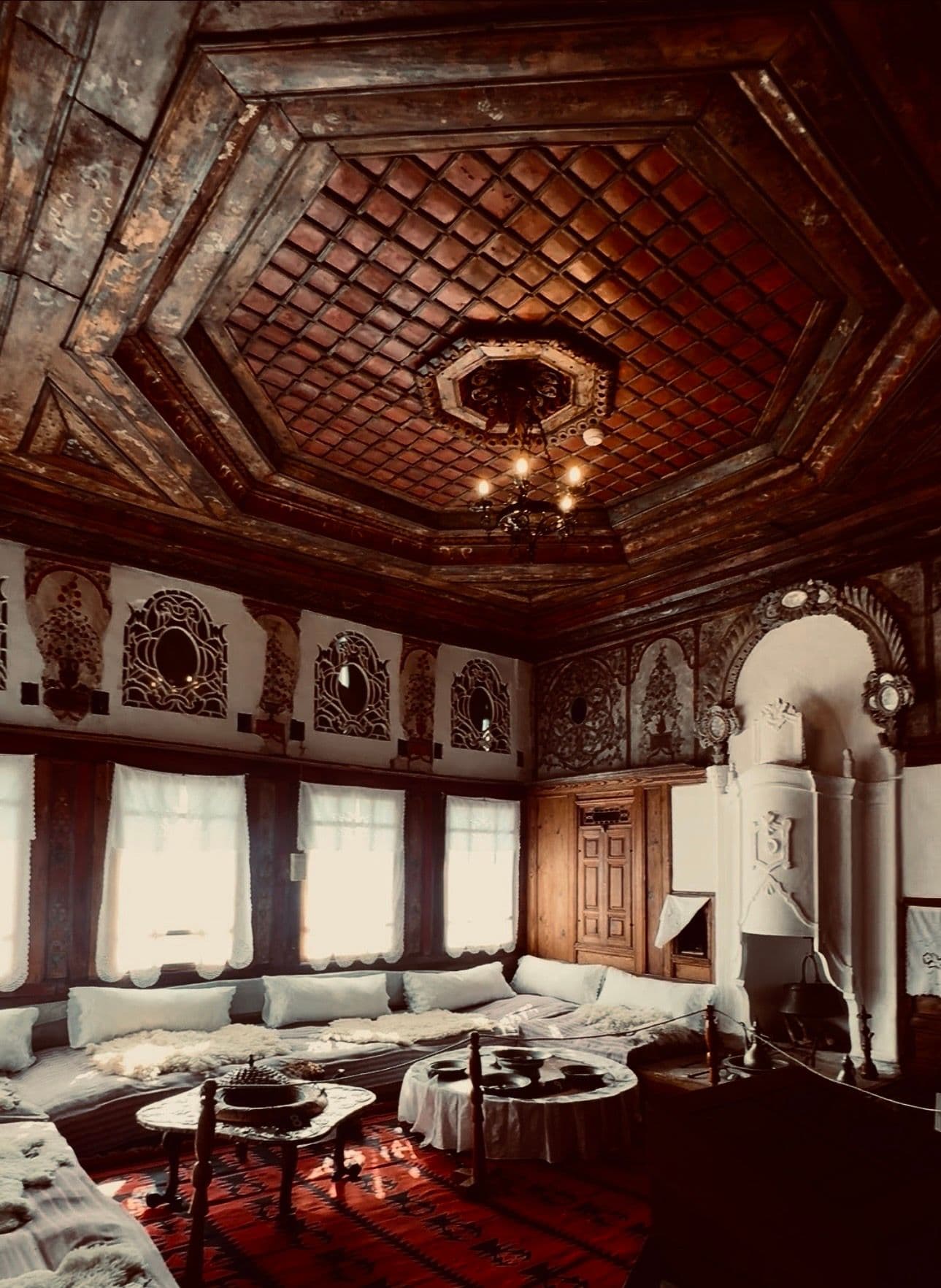
A traditional living room model in Albania
I used to think a living room was just a room.
A sofa. A coffee table. A television. A cabinet full of glasswares and ceramics no one was allowed to touch unless guests came over. Maybe plastic flowers, lace curtains, polished wood, family photographs, and a rug that had to be protected from everyday life.
But the more I think about domestic space, the less innocent the living room seems. The other day, I was exploring an ethnographic museum in Albania. The room that caught attention was 'Oda', living room or best room, a 'semi-public stage' inside the home. Guests were received, meals were served, family occasions were marked, and social reputation was performed. Hierarchy mattered in “sitting, eating, or speaking,” with the host opening discussion and the eldest guest having the final word. Gave me deja vu of how I’ve seen my grandparents’ home growing up. The living room was strictly ‘male-coded’ when it had guests.
The living room is where a family presents itself to the world, often protected from the people who live there. Children cannot play freely. Women may clean it but not relax in it. Guests are honored in it, while the family must behave carefully inside it.
Patriarchy does not only survive through laws, misinterpretation of religion, or explicit rules. The father, grandfather, uncle, or male guest may occupy the symbolic center of the room, while women circulate around the edges, carrying coffee, food, plates, and politeness. Foucault convinced me how power operates not only through institutions but through spatial arrangements and everyday practices. The living room becomes a micro-architecture of discipline, where bodies learn where they belong without being explicitly told. A woman could maintain the room without controlling the conversation inside it. She could serve the tea without being invited into the decision. She could protect the family’s reputation without being allowed to define it. She may manage the symbolic, aesthetic atmosphere of the home while men claim its authority.
Took me a while to realize how designs can be political, or patriarchy, architectural.